The Creation of Adam
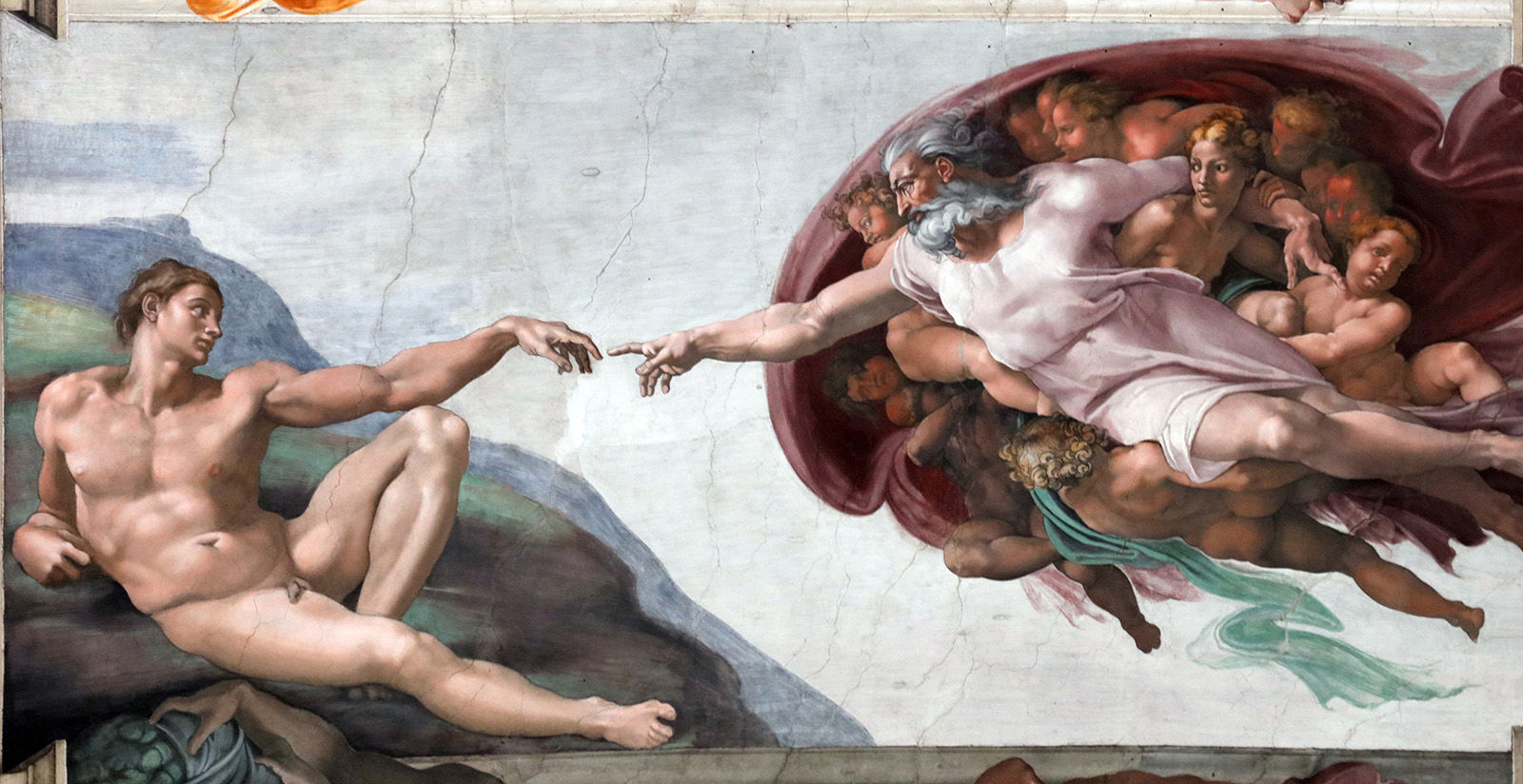
This is undoubtedly the most famous image in the Sistine Chapel.
The scene depicts the moment when God passes the spark of life to Adam. The two hands almost touching have become one of the universal symbols of Western art.
Seeing it in person reveals the full tension of the moment: contact has not yet occurred, but it is about to happen. It is precisely this sense of anticipation that makes the work so powerful.
The Last Judgment
On the wall behind the altar is the majestic Last Judgment, painted between 1536 and 1541.
Here, Michelangelo depicts the return of Christ and the final judgment of humanity through hundreds of figures in motion.
The work is striking for the dynamism of the figures, the expressive power of the bodies and the artist’s extraordinary ability to convey emotion through painting.
The Sibyls and the Prophets
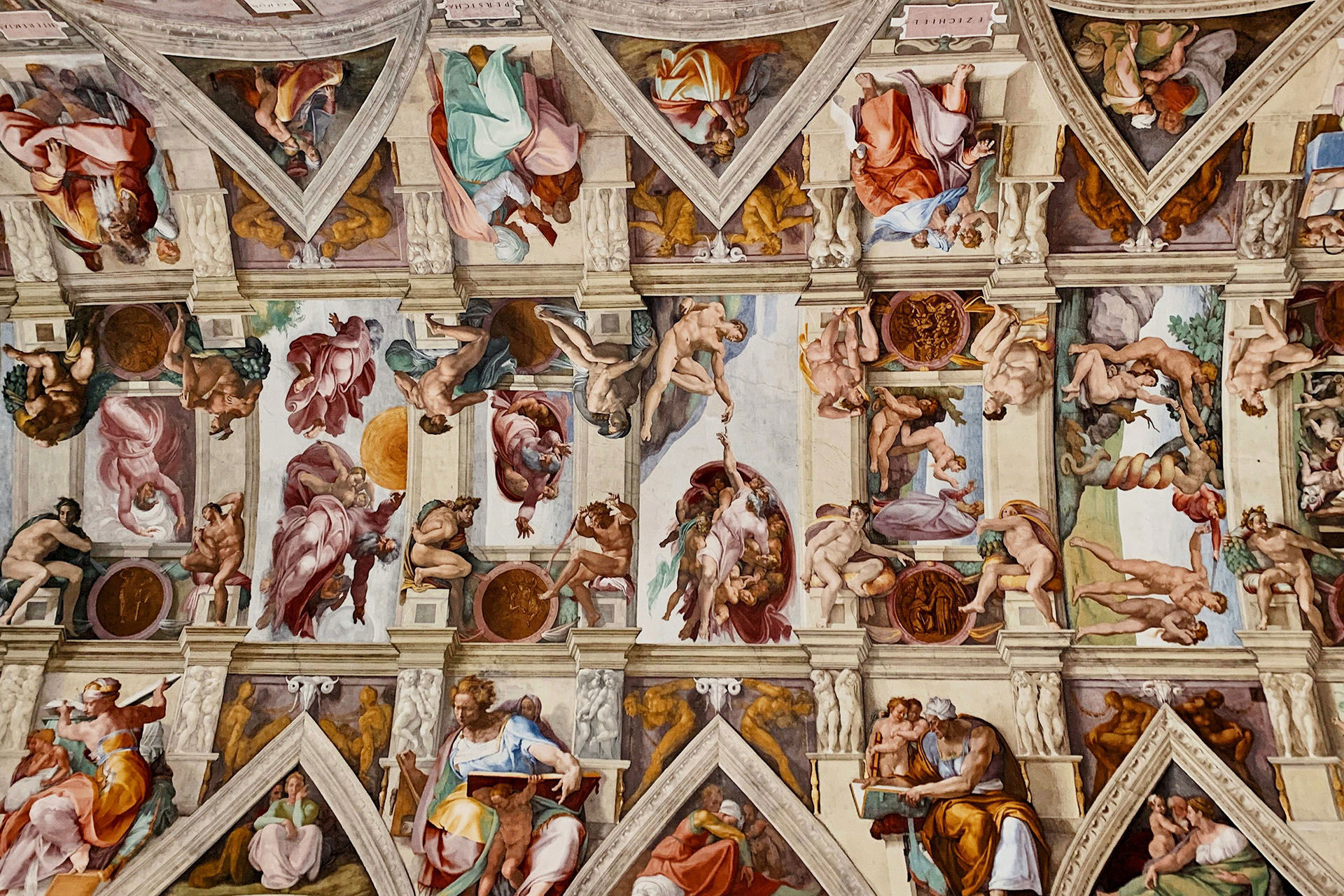
Surrounding the main scenes are twelve monumental figures: seven Prophets of the Old Testament and five Sibyls from classical tradition.
According to tradition, they had all foretold the coming of the Messiah. Michelangelo portrayed them in highly natural and energetic poses, displaying an unprecedented knowledge of anatomy.
The Ignudi
Among the most fascinating elements of the ceiling are the Ignudi, twenty nude young men seated around the scenes from Genesis.
Their meaning is still debated by scholars, but they remain one of the finest expressions of the Renaissance ideal of beauty.
The Frescoes by Botticelli and Perugino
Before leaving the Sistine Chapel, take a few moments to admire the side walls as well.
Here you will find magnificent scenes painted by Botticelli, Perugino, Ghirlandaio and the other great masters of the 15th century. These frescoes engage in a visual dialogue with Michelangelo’s works and complete the chapel’s artistic narrative.